
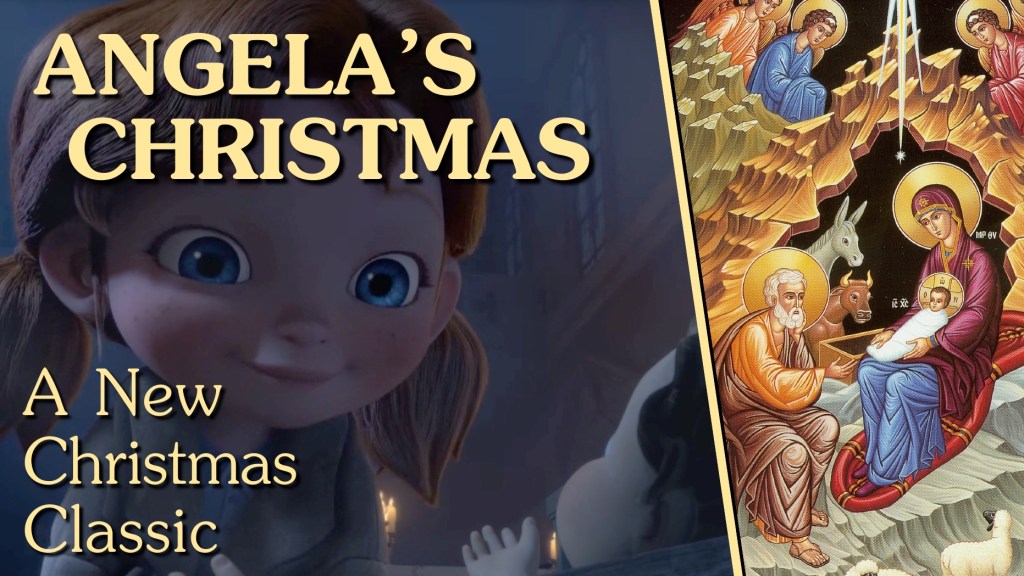
An adapted version of this script has been published at Busted Halo under the title “The Netflix Children’s Movie That Draws Us in to Christ’s Nativity“!
—
Thou hast light in dark, and shutt’st in little room Immensity, cloister'd in thy dear womb ~ From “Annunciation” by John Donne
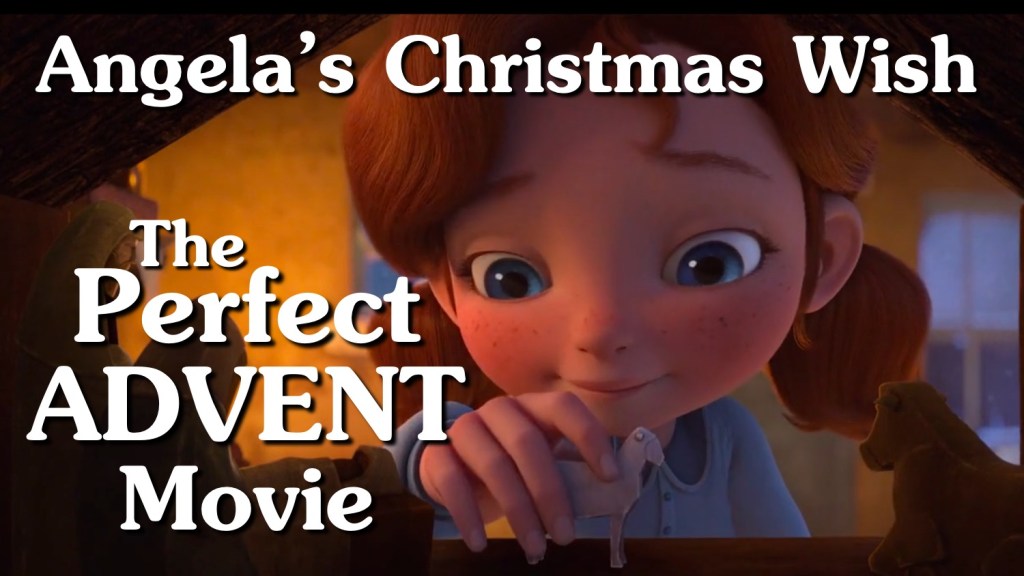
Angela’s Christmas, a short Emmy-nominated children’s film on Netflix, is unassuming to say the least. It’s become a favorite of my four-year-old, who calls it simply, “the one about the girl who steals the baby Jesus.” And this description really does encapsulate the basics of the plot. I’ve also come to love this new little Christmas film, and not just because it is charming and beautifully made. I find it to be striking in the way that it actually highlights, unwittingly perhaps, some of the deepest symbolic aspects of Christmas itself.
Angela’s Christmas is an adaptation of a children’s book by Frank McCort called Angela and the Baby Jesus. The book is based on a true story of McCort’s mother as a child, and she is the same Angela as the titular character in McCort’s Pulitzer Prize-winning memoir Angela’s Ashes. These two books share their settings and moods, both focusing on struggling, impoverished families in Limerick, Ireland. These realities are immediately obvious from the start of Angela’s Christmas. The family, whose father is later revealed to be imprisoned, lives a life plagued by hardship in a run-down house. The bright innocence of the children is overshadowed by the gloomy darkness that pervades the bulk of the film. Angela’s world is marked by images of moral darkness that embody the harsh realities of the adult world. Much like the Advent season, it is the darkest of nights, hopefully anticipating the appearance of light.
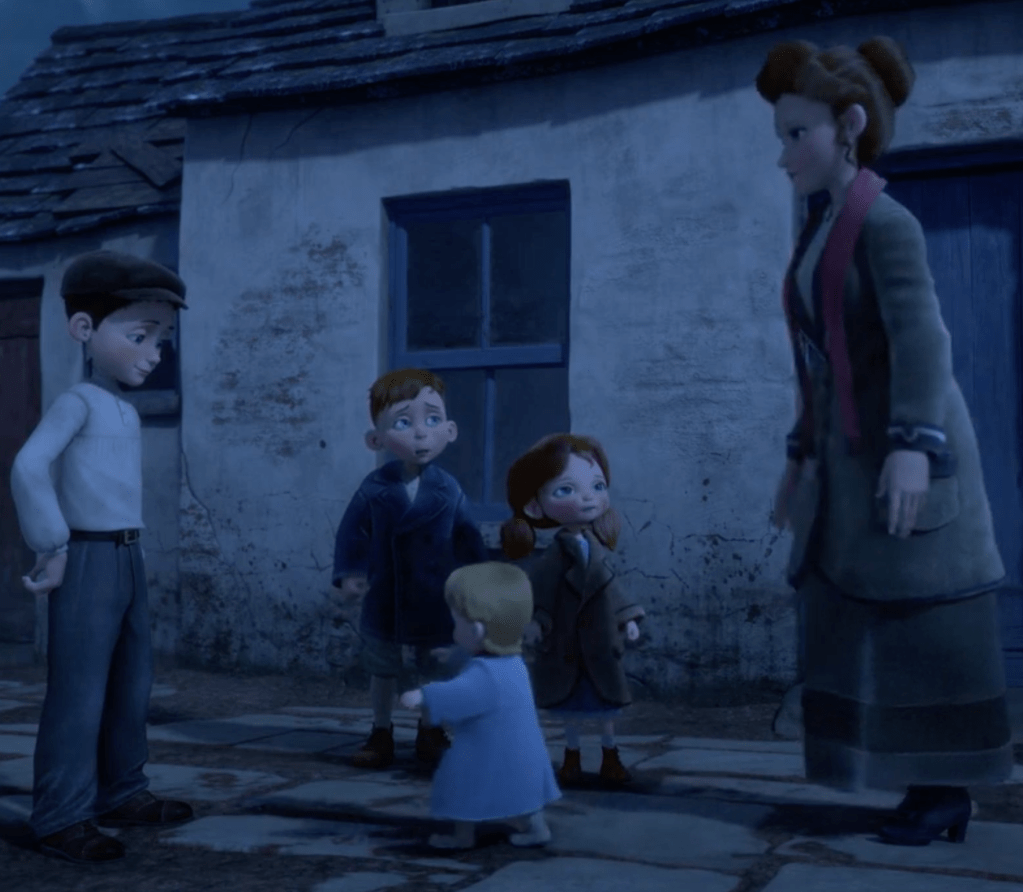
In this bleak setting, the family is welcomed in by the warm lights of their church, where Angela, in her gentle compassion, sees a figure that is not illumined by this warmth. In an interview, Frank McCort said that this charming childhood story of little Angela taking the baby Jesus statue in an effort to keep him warm signified his mother’s already powerful maternal instinct. “Kindness was her umbrella virtue,” McCort said.1.
I remember the first time I saw this film, I was struck not only by the sweetness and the innocence of this gesture — the way it embodied this little girl’s heart and the warmth of the Christmas season. But also I was struck by how profoundly this act reminded me of the Christmas story itself.
What is most powerful about Christ’s nativity and the mystery of the incarnation is how jarring these concepts are. How could a baby, born in such a quintessentially humble setting, be the son of the Creator God breaking into the earthly realm? Why is this lone child born in the midst of human chaos — during a period of infant genocide no less — so revolutionary? Like the star above the stable, why is this innocent baby born in the darkness in a dirty manger so beautiful and inviting to so many?
In Angela’s Christmas, I think we can see many of these paradoxes and mysteries at the heart of the nativity story at play again. This simple act of her cradling the baby Jesus statue had a similarly jarring effect on me. How is it that such innocence and goodness can exist in this bleak setting? Why is this small act of nurturing care and Angela’s kind heart so affecting to us and to those around her? Why is her light so powerful, despite all the darkness around her?
Just as the star guided the shepherds and Magi to a world-changing revelation, and just as Christ’s birth was a spark for a growing brightness to come, the “light” of Angela’s act does the same in her small world. The film’s director Daminen O’Connor actually said that warmth and light in the film represent love, and “As Angela moves through the story she moves from the cold blues into the warmth, eventually ending up fully basked in the gold heat of the family fire.”2. Her light, like Christ, chases away the dark.
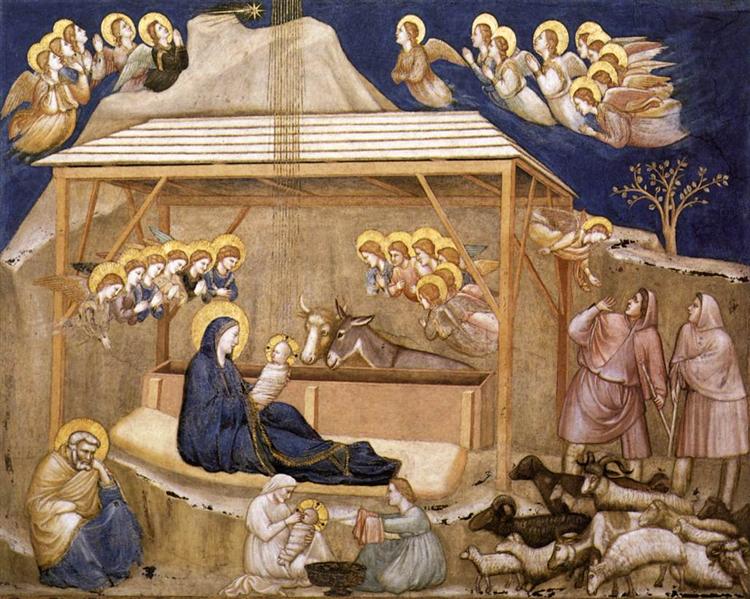
However, the relevant symbolism of the Christmas story here goes even further than this. Properly understood, Christ’s nativity is not merely a moment of duality and paradox; it is a moment that brings together and unites what is most distinct and contradictory. Eastern Orthodox icon carver Jonathan Pageau explains that “[Christ’s] incarnation acts as the anchor, the fulcrum, around which all manifestation holds together. Christ unites the highest – angels and star, with the lowest – animals and a cave. He brings together the far and wise – the wisemen, to the near and simple – the shepherds. All of this is an image of how the Divine Logos holds the world together.”3.
Carl Jung said something similar about the way that a child, archetypically understood, is a unifying force of disparate elements: “The ‘child’ is all that is abandoned and exposed and at the same time divinely powerful; the insignificant, dubious beginning, and the triumphal end.”4.
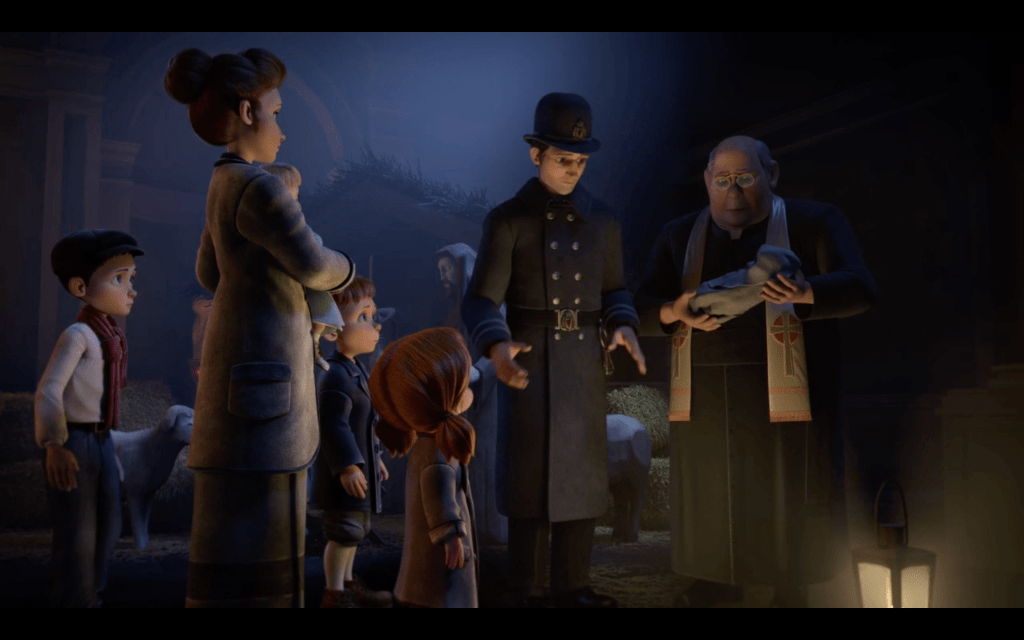
I think we can see this sort of unification and bringing together of opposites also played out in Angela’s story, from her dubious beginning to her triumphal end. Her family is brought closer together, in the same spirit that her father tried to enact when Angela was born. Her brother, who pesters and teases her, has a sudden shift in heart towards sacrificial love for his sister at the end. Forces of authority in both the church and the state are brought together in humble unity, all as a result of this simple, unassuming act. And the blind beggar, who is an early embodiment of the story’s harsh setting, is welcomed into warmth, also as a result of Angela’s kindness. Her act, like the birth of Christ, draws people from all walks of life to come together, in humility, in the light of something greater than themselves.
So when I watched the film a second time, the opening image of a candle illuminating darkness had an entirely new depth of meaning to me. It is light that is emblematic of the Light that — as the film’s theme song proclaims — “shines…on all the things to come.”5.

Citations
- Interview with author Frank McCourt – https://youtu.be/71GaflvaR90
- Interview with director Damien O’Connor – https://www.brownbagfilms.com/labs/entry/behind-the-scenes-with-angelas-christmas-director-damien-oconnor
- Jonathan Pageau, “The Nativity Icon as an Image of Reality” – https://orthodoxartsjournal.org/nativity-icon-image-reality
- C.G. Jung, The Archetypes and the Collective Uncounsious – https://www.goodreads.com/book/show/67890.The_Archetypes_and_the_Collective_Unconscious
- “Angela’s Song” – http://cranberriesworld.com/music/song-list-a-z/angelas-song/

 Mark Cooprider
Leave a comment