
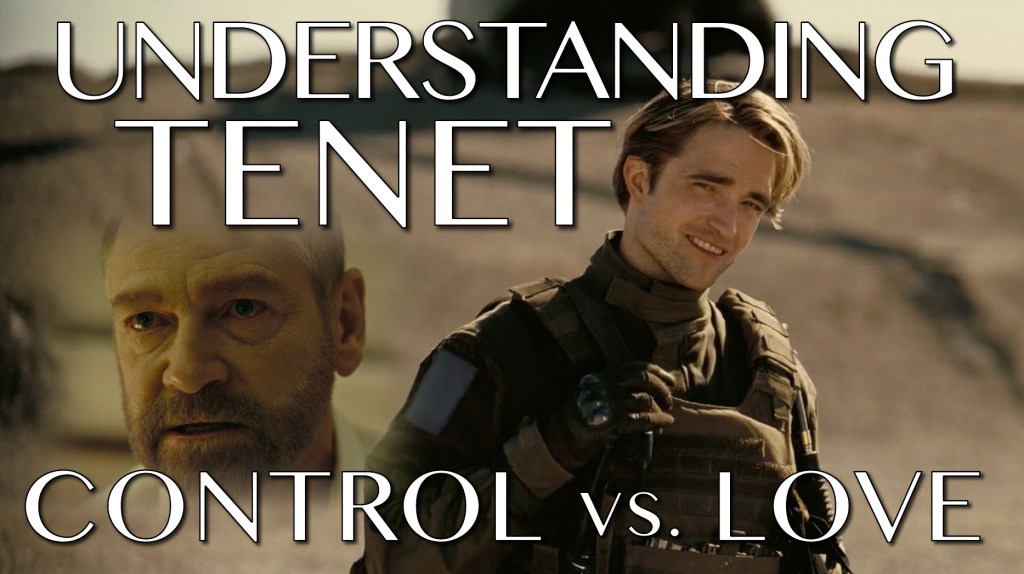
“The more one forgets himself–by giving himself to a cause to serve or another person to love–the more human he is and the more he actualizes himself.” ~Victor Frankl, Man’s Search for Meaning
With Christopher Nolan’s film Tenet being centered on time travel and the plot being driven by a mission to stop an impending apocalypse, it’s easy to see the philosophical tension between determinism and free will at play. Now, I’m not going to attempt to explicate these philosophical ideas in the film or explain its extremely intricate plot. But what I’d like to propose is that perhaps the better way to understand this film’s basic themes is actually not through the dichotomy of fate vs. free will, but rather through the dichotomy of control vs. freedom — a freedom that finds its fullest expression in love.
The motif of control in Tenet is present from the beginning, starting with the introduction of the time-bending concept of inversion and the ability to communicate across time. But the human desire for control finds its full form embodied in the film’s antagonist, Andrei Sator. Sator’s journey of amassing his fortune was sparked by the tyrannical act of a cold-blooded murder, which then led to his ability to communicate with the future and exert a sense of control over fate and time. Captured well in the film’s opening scene and the disruption of the concert, his organization is bent on destroying what is good and beautiful to attain their end. Obviously, his plan to use the Algorithm to bring about the destruction of the world reflects an obsession with, in his words at the end, “playing God” and exerting absolute power over the future of humanity.
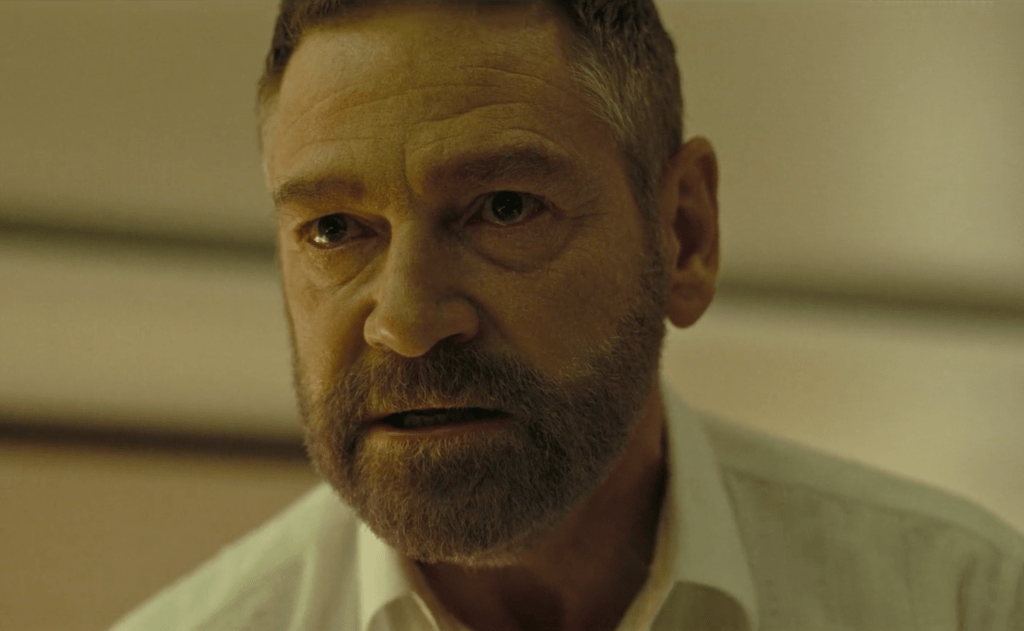
But there’s more to Sator’s obsession with control than that. He is said to be a man who acts obsessively about his health, but he is now dying from cancer. Thus, his desire to commit suicide at the perfect time is one last obsessive move — one that reflects the universal desire we all have to somehow control and conquer death. And just as Sator tries to assert control over time and death, he asserts tyrannical control over his wife, Kat. Their relationship is introduced with the description of him manipulating her through blackmail. And the ultimatum he gives her — essentially the choice between her life or her son’s life — represents the complete elimination of Kat’s freedom, leading her to be trapped in an oppressive, loveless marriage. Even the Goya painting that is the catalyst of his blackmail presents a scene of revenge against a tyrant.
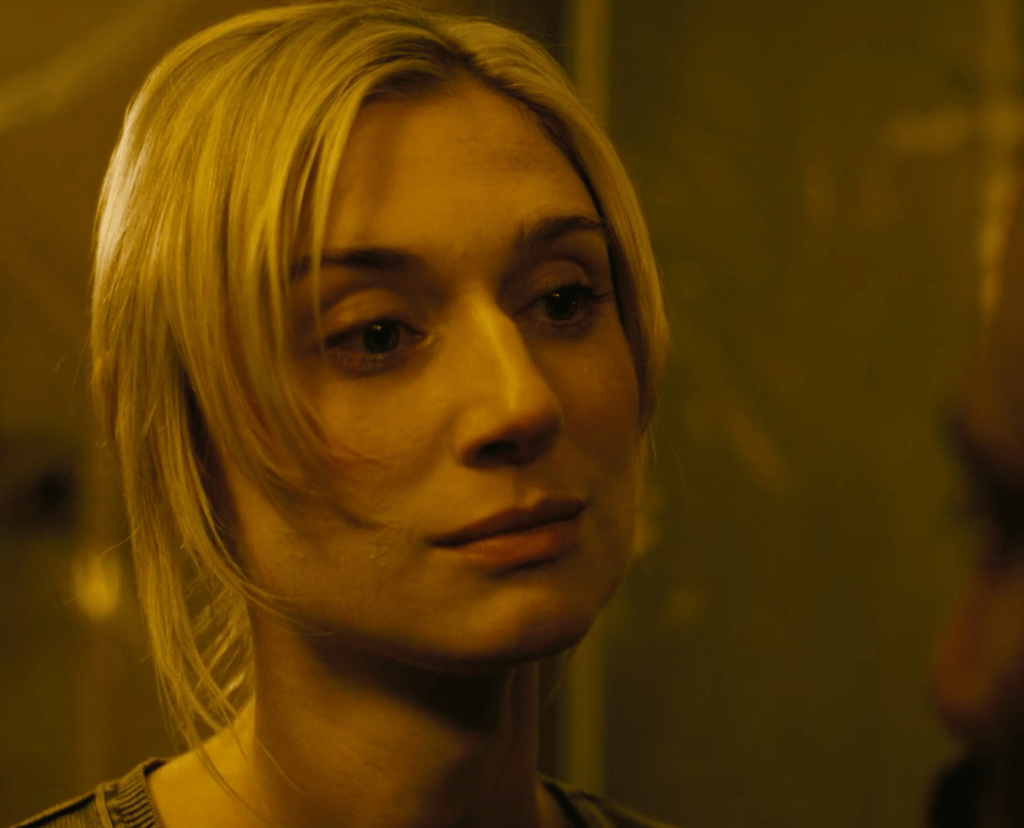
Additionally, we can view an obsession with control as being the reason humanity faces an impending dystopia in the first place. This projected future Sator describes, in which the “oceans have risen and the rivers run dry,” is clearly a nod to environmental destruction. And what is environmental destruction if not the result of humans irresponsibly wielding technology in our never-ending quest to control the natural world? Like so many stories before it — the Tower of Babel, the Greek myth of Cronus, Frankenstein — Tenet stands as a warning against an unhealthy hunger for power and control.
So if Nolan warns us on so many levels of these dangers, what is his solution? In some respects, we can simply view a celebration of freedom as the other side of this coin. If Sator embodies control, the film’s hero, aptly named “the protagonist,” could certainly stand for the concept of freedom. Just as the decisions of any protagonist guide a story, we can see the choices of Tenet’s protagonist at the helm of the Tenet organization countering the efforts of those whose quest for power becomes too great. He uses his freedom, often in the face of intimidating odds and against the advice of others, to achieve his goals.
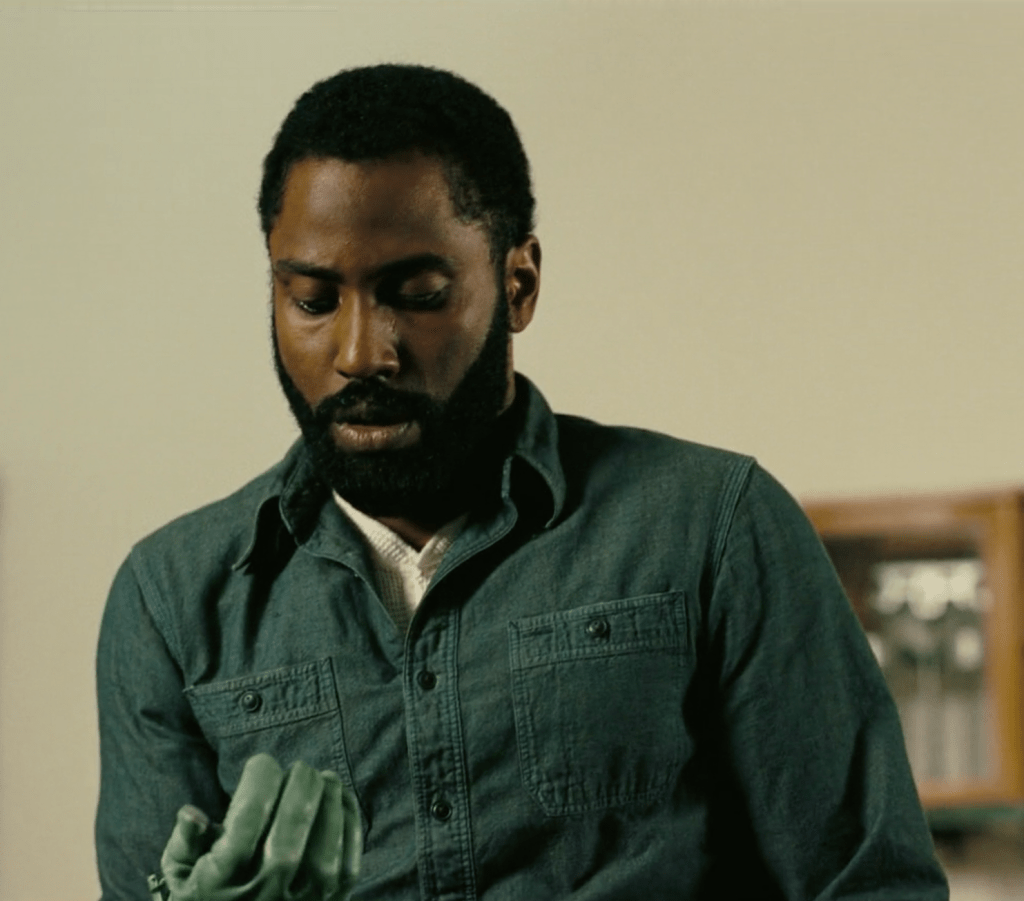
Kat’s journey is also marked by a yearning for freedom. She remarks that she envies the freedom of the woman diving off of the boat early in the film. And then we see her literally become that freed woman at the end by asserting herself over her tyrannical husband, taking from him his desired control over their marriage and over his own death.
However, the film speaks numerous times of higher ideals— in belief in something beyond causality and fate.
I think the best way to view the film’s primary counter to obsessive control is its celebration of unselfish love. Philosophers have actually long considered the relationship between freedom and love, with many insisting that a sense of free choice is necessary to achieve the most valuable forms of love. Victor Frankl called love “the ultimate and highest goal to which man can aspire.”1 We also might say that love seems to be the best opposition to tyranny. Author bell hooks puts it well: “The moment we choose to love we begin to move toward freedom, to act in ways that liberate ourselves and others.”2
More than freedom, what motivates Kat most is the love of her son. And in the case of the protagonist, his most important choices are marked by a sense of care and love. He is dedicated to protecting humanity in what Sator calls a fanatical blind faith. He chooses to save Sator, despite his knowledge of Sator’s evil intentions. And in complete contrast to Sator’s domineering abuse, he displays unconditional, unselfish love towards Kat. He takes risks in his choices to protect her, even carried through until the final scene. In his words, it’s the bombs that don’t go off — seemingly small acts of care that go unnoticed — that truly have the power to save the world.
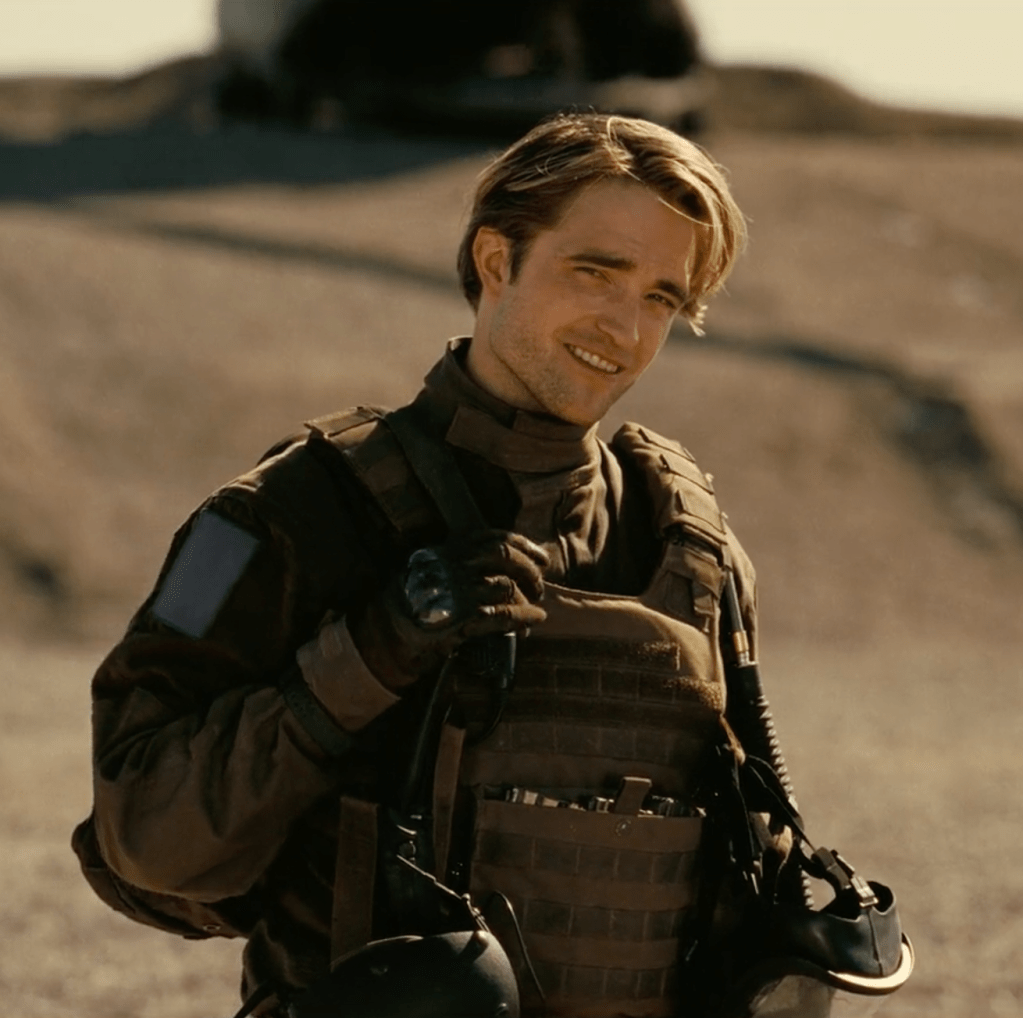
Yet we see this emphasis on unselfish love most powerfully with the film basically being bookended by two acts of self-sacrifice. This is crucial because it inverts Sator’s full-fledged grasping of control, and presents self-sacrifice as the ultimate defiance and giving up of control and therefore the ultimate act of love. This calls to mind the famous words of Christ, that “Greater love hath no man than this, that a man lay down his life for his friends” (John 15:13 KJV). The protagonist’s self-sacrifice for the greater good at the beginning sets him on his path, and the entire resolution of the film hangs on Neil’s self-sacrifice at the end.
Neil’s act especially I find to be marked by allusions to the story of Christ — which is the most archetypal story of a loving sacrifice, of conquering death by death. I don’t think this reference is a stretch, especially considering that the Sator Square, the inspiration for the title and many plot elements, was used as an ancient Christian symbol for God’s omnipotence and sacrifice.
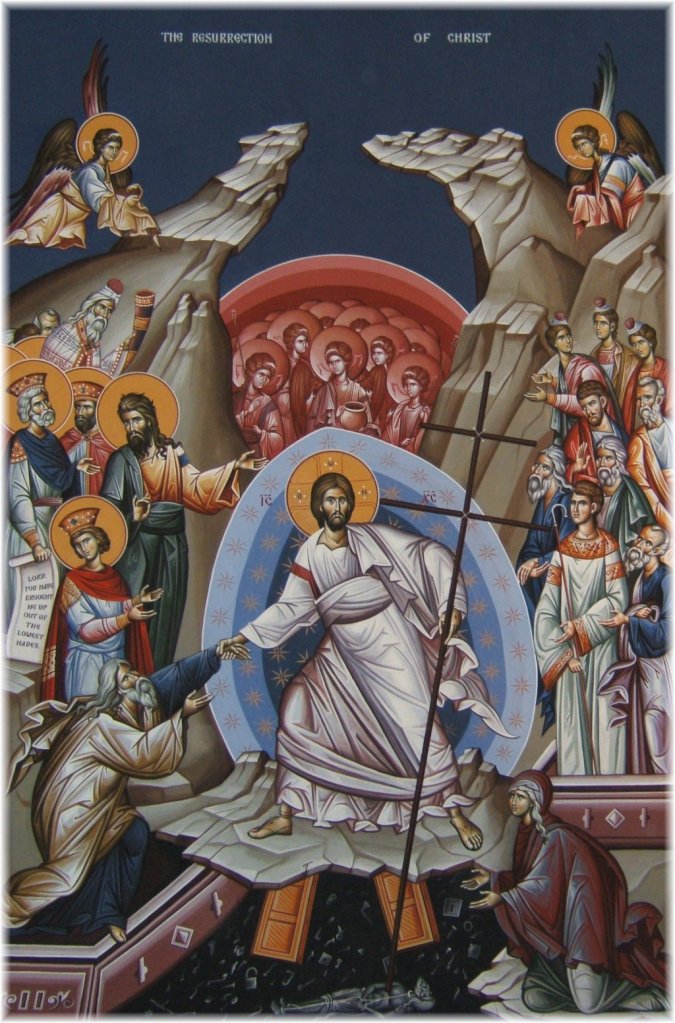
Neil is revealed at the end to have been an ever-present source of aid for the protagonist, who the protagonist himself nurtured and trained in a father-son type relationship. The final mission to stop Sator, called a “temporal pincer movement,” can be likened to the idea of a timeless God entering into an exact moment in human history as an answer to sin (which itself can be viewed as humanity’s attempts to assert tyrannical control over our lives and the world). Neil voluntarily stands in the way of Sator’s kill order on the protagonist, and he speaks of the act as an inevitability that is part of an inalterable plan. Additionally, Neil descending in the climactic scene and pulling up the two men from the dark abyss — which Sator himself calls a tomb — is classic Christian symbolism. It is reminiscent of how the crucifixion is understood theologically and even how the resurrection is depicted symbolically in icons, as Christ uses his cross to reach down into the depths and rescue humanity from sin and death.
So while Tenet may not immediately seem like a film about love, in the midst of its winding plot and philosophical complexity, its practical takeaways are clear. Have hope. Resist the temptations of power and tyranny. Seek the highest good. Choose love — willing the good of the other—as the one true counter for toxic ambition. At the end of the film, this kind of faith Neil simply calls “reality.” And it was Dr. Martin Luther King who said that it is love that unlocks the door to the meaning of ultimate reality.3
Citations
- Viktor E. Frankl, Man’s Search for Meaning – https://www.goodreads.com/book/show/4069.Man_s_Search_for_Meaning
- bell hooks, “Love as the Practice of Freedom” in Outlaw Culture: Resisting Representations – https://www.goodreads.com/en/book/show/51376.Outlaw_Culture
- Martin Luther King Jr., “I Have Decided to Stick With Love” in A Testament of Hope – https://www.goodreads.com/book/show/53360.A_Testament_of_Hope
 Mark Cooprider
Leave a comment